Strength Standards by Age: Teens and Masters Lifters
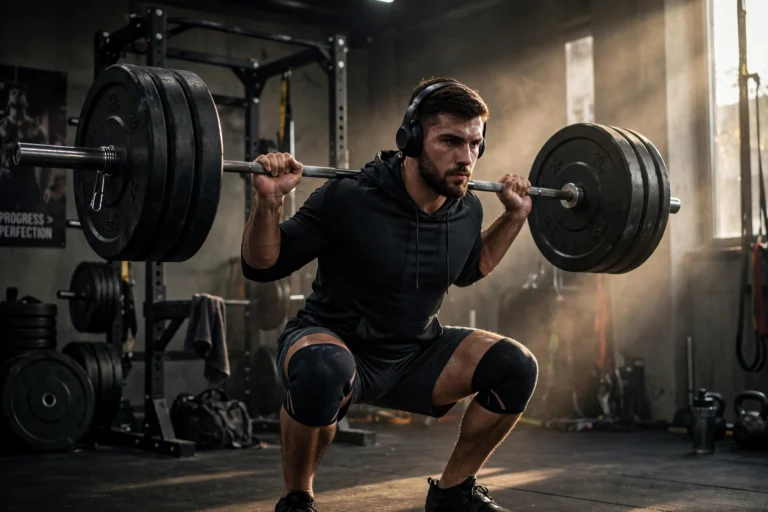
How strong should a 16-year-old be? What about a 55-year-old? The honest answer: age matters more than most strength charts admit. Teens should chase technique, not maxes — and lifters over 40 can stay remarkably strong, but the benchmarks shift. Here’s what’s realistic at each end of the age curve.
Should Teenagers Test Their One-Rep Max?
My short answer: not a true 1RM, and definitely not before about 16. This isn’t me being cautious for the sake of it — it’s about growth plates.
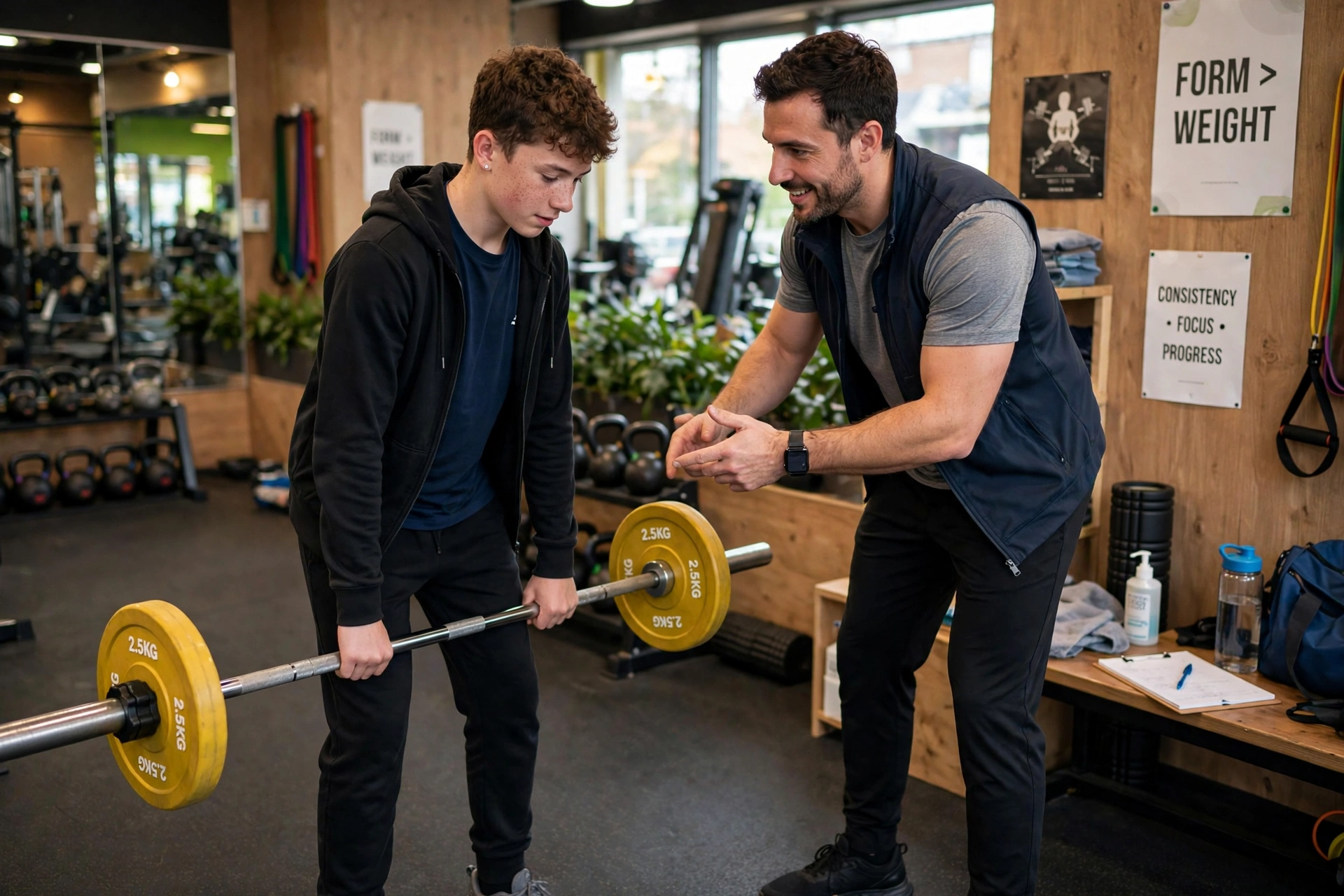
Adolescent bones are still growing at the epiphyseal plates, and while supervised resistance training is safe and beneficial for teens (the NSCA and pediatric sports medicine groups agree on this), maximal single attempts add risk without adding much value. A 15-year-old doesn’t need to know their true 1RM; they need to learn to squat, hinge, press, and brace with textbook form.
The practical substitute: use rep-maxes instead. A solid 5-rep max, plugged into a 1RM estimator, gives a teen (or their coach) every number they need for programming — without ever grinding a true single. Save the max testing for 16-plus, supervised, and after at least a year of consistent technique work.
What Are Realistic Strength Standards for Teen Lifters?
Teen standards are the roughest numbers in this whole guide, so take them as directions, not destinations. Growth spurts, training age, and coaching quality swing these wildly. That said, here are reasonable bodyweight-ratio benchmarks for trained teens:
Ages 16–17 (at least a year of training)
| Lift | Developing | Strong for age |
|---|---|---|
| Bench press | 0.6× bodyweight | 0.85× bodyweight |
| Squat | 0.8× bodyweight | 1.2× bodyweight |
| Deadlift | 1.0× bodyweight | 1.5× bodyweight |
Ages 18–19 (nearing physical maturity)
| Lift | Developing | Strong for age |
|---|---|---|
| Bench press | 0.7× bodyweight | 1.0× bodyweight |
| Squat | 1.0× bodyweight | 1.4× bodyweight |
| Deadlift | 1.25× bodyweight | 1.75× bodyweight |
The single most important thing for a teen lifter isn’t the ratio — it’s the movement quality behind it. A 17-year-old squatting 1.2× bodyweight with beautiful depth and bracing is building a base that will pay off for decades. A 17-year-old grinding ugly singles for Instagram is building a future injury. Coaches and parents: reward the first kid, not the second.
When Does Strength Peak, and How Fast Does It Decline?
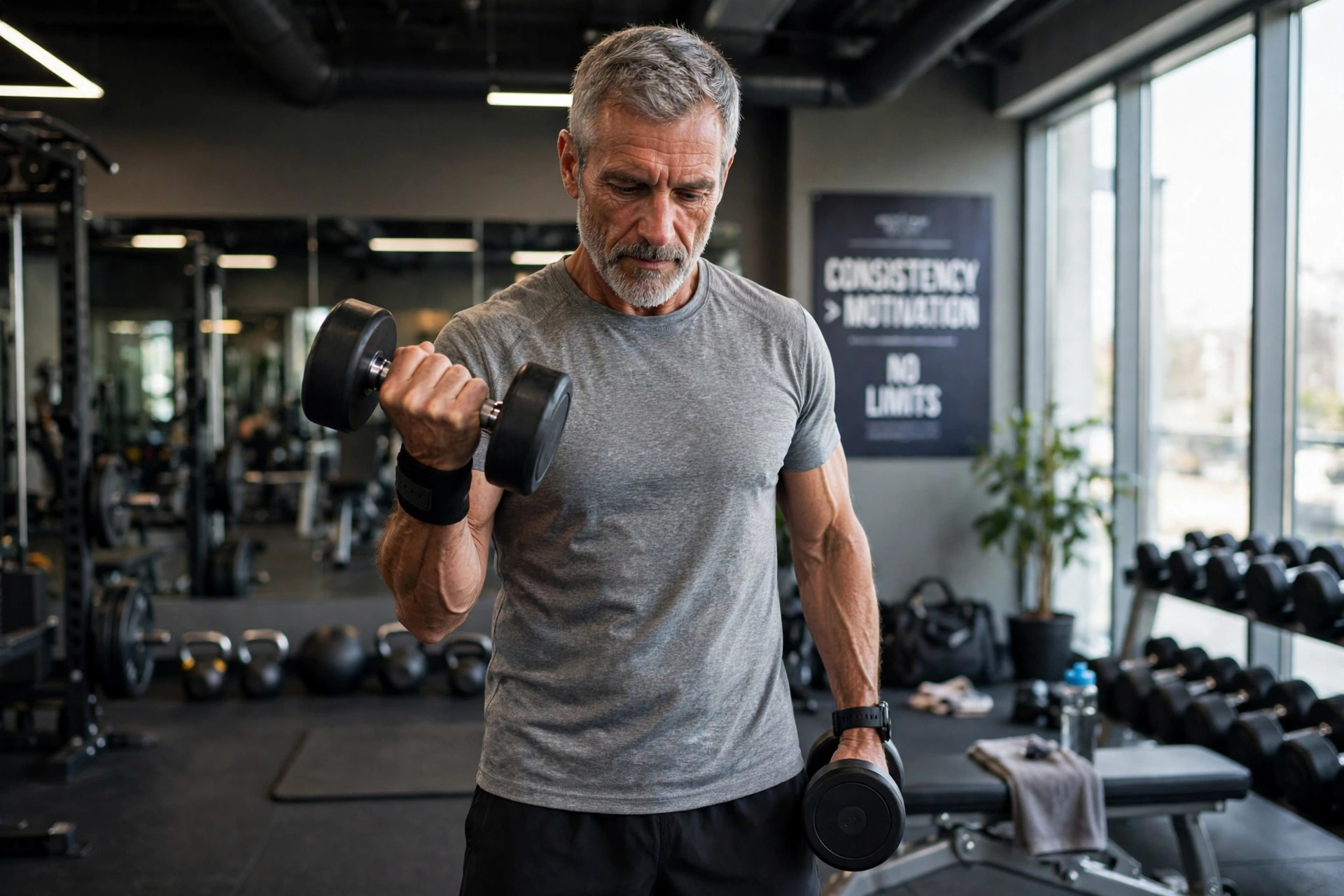
Here’s the good news for everyone over 30: maximal strength peaks later than you’d think — generally late 20s through the 30s — and it declines slowly if you keep training. The lifter who trains consistently at 45 is usually stronger than the one who quit at 28.
The decline is real, though. A common coaching rule of thumb: expect to hold roughly 90% of your lifetime strength through your 40s, about 80% through your 50s, and then a gradual slide of something like 1% per year after 50. That “1% per year” figure gets quoted a lot — treat it as a rough observation from coaching practice, not a laboratory law. Individual variation is enormous: the 60-year-old who never stopped training will out-lift plenty of 30-year-olds.
What actually drives the decline? Mostly muscle mass loss (sarcopenia), slower recovery, and accumulated joint wear — not some cliff your nervous system falls off. Which means the countermeasures are exactly what you’d guess: keep lifting, prioritize protein, and respect recovery a little more each decade.
What Are Realistic Standards for Masters Lifters (40+)?
Take the open (adult) standards and apply an age multiplier. These multipliers are coaching consensus, not precise science — but they’re honest:
| Age group | Multiplier | Example: 1.5× BW squat standard becomes… |
|---|---|---|
| 40–49 | ~90% | ~1.35× bodyweight |
| 50–59 | ~80% | ~1.20× bodyweight |
| 60–69 | ~70% | ~1.05× bodyweight |
| 70+ | ~60% | ~0.90× bodyweight |
Worked example: the 52-year-old deadlifter
A 52-year-old man weighing 190 lb deadlifts 315 lb. Open advanced standard for deadlift is 2.5× bodyweight; at 80% (age 50–59), that’s 2.0×, or 380 lb. His ratio: 315 ÷ 190 = 1.66×. Against the age-adjusted scale, he’s between intermediate and advanced for his age — strong, and with room to climb. Judged against 25-year-old standards he’d look “behind,” which is exactly why age-adjusted benchmarks exist.
Worked example: the 45-year-old bencher
A 45-year-old woman weighing 145 lb benches 95 lb: 95 ÷ 145 = 0.66×. Women’s advanced bench is ~0.95×; at 90% for her 40s, that’s ~0.86×. She’s at 0.66× — solidly intermediate for her age and sex, and a bodyweight bench (145 lb) would put her at advanced. Clear target, honest framing.
If you’re over 40 and wondering where your big three sit, run your numbers through the Wilks calculator or DOTS calculator — both score your lifts relative to bodyweight, which pairs well with age-adjusted expectations.
How Should Teens Program Their Training?
Simple, and boring on purpose. Full-body sessions 2–3 times a week, built around the squat, hinge, press, and row patterns. Sets of 5–8 reps — heavy enough to build strength, light enough to keep form clean. Add a little weight when all sets look sharp.
What teens should not do: max out, follow advanced powerlifting peaking programs, or cut weight for a weight class. The goal of teen training is to arrive at 20 with great movement patterns, a big work capacity, and healthy joints. Strength built on that foundation lasts; strength built on grinding doesn’t.
A note for parents and coaches
Supervision matters more than programming. A teen with a coach watching their bracing and depth will progress safely for years. A teen copying heavy singles from social media is the scenario every sports-medicine doc warns about. Be the first situation.
How Should Masters Lifters Program Differently?
The training doesn’t need an overhaul — it needs tuning. Here’s what I’d change for a lifter over 45:
1. Warm up like it’s your job
At 25, you could walk in and squat. At 50, the first 15 minutes determine the session. Use a real ramp-up — our warm-up protocol works for daily training too, not just max tests.
2. Trade some intensity for volume
You don’t need to live above 90% to keep getting stronger. Plenty of masters lifters thrive on submaximal work — sets of 5–8 at 70–80% — with occasional heavier exposures. The joints last longer, and the strength still comes.
3. Pick joint-friendly variations
There’s no moral superiority in the straight bar. Safety-bar squats, trap-bar deadlifts, dumbbell presses, and neutral-grip variations let beat-up shoulders, hips, and backs keep training hard. The muscles don’t know the difference; your joints do.
4. Recover like you mean it
Sleep and protein matter at every age, but the margin for sloppiness shrinks. The 55-year-old sleeping six hours and skipping meals will feel it in a way the 25-year-old won’t. This isn’t fragility — it’s just accounting.
5. Test less often, train more
A masters lifter doesn’t need to max out quarterly. One or two true tests a year is plenty; the rest of the time, rep PRs and estimated maxes (see how accurate calculators are) track progress without the recovery cost of a true single.
A Note on These Numbers
Same honesty policy as the rest of this series: these are community-consensus benchmarks, not peer-reviewed findings. The teen tables are the roughest — puberty timing alone can swing a 16-year-old’s numbers by 30%. The masters multipliers are coaching observations that hold up well in practice but were never derived in a lab.
Use them the way they’re meant to be used: as a compass, not a courtroom. If the chart says you’re “behind” but you’re training consistently, eating well, and getting stronger month to month — you’re winning, and the chart can wait.
Frequently Asked Questions
At what age can my teen start lifting weights?
Supervised resistance training is appropriate well before the teens — many kids start learning movement patterns around 10–12 with light loads. What’s age-gated is maximal loading: hold off on true 1RM attempts until around 16, after growth plates are further along and technique is solid.
Is it too late to start lifting at 50 or 60?
Not even close. Older beginners often gain strength faster than expected because their starting point is low and the body adapts quickly to new stimulus. Start light, learn the movements, progress gradually — the standards above give you honest milestones to chase.
Will lifting stunt my teenager’s growth?
No — that’s a myth. Supervised youth resistance training does not damage growth plates or stunt growth; pediatric sports medicine organizations support it. What can cause injury is unsupervised maximal lifting with bad form, which is a supervision problem, not a lifting problem.
How much strength will I lose after 60 if I keep training?
Far less than if you stop. Lifters who train consistently through their 60s typically retain the large majority of their strength, declining gradually rather than falling off a cliff. The biggest age-related strength loss happens to people who quit — detraining beats aging as a strength killer every time.
Should masters lifters still do heavy singles?
Occasionally, if joints tolerate it — there’s real value in practicing heavy. But it’s optional, not mandatory. Submaximal training with rep PRs builds and maintains strength effectively, and many masters lifters do their best long-term training without ever grinding a true max.
Sources
- Haff, G.G. & Triplett, N.T. (Eds.). Essentials of Strength Training and Conditioning (NSCA). Human Kinetics — youth resistance training guidelines and age-related training considerations.
- LeSuer, D.A., et al. (1997). “The accuracy of prediction equations for estimating 1-RM performance.” Journal of Strength and Conditioning Research, 11(4), 211–213.
Learn more