
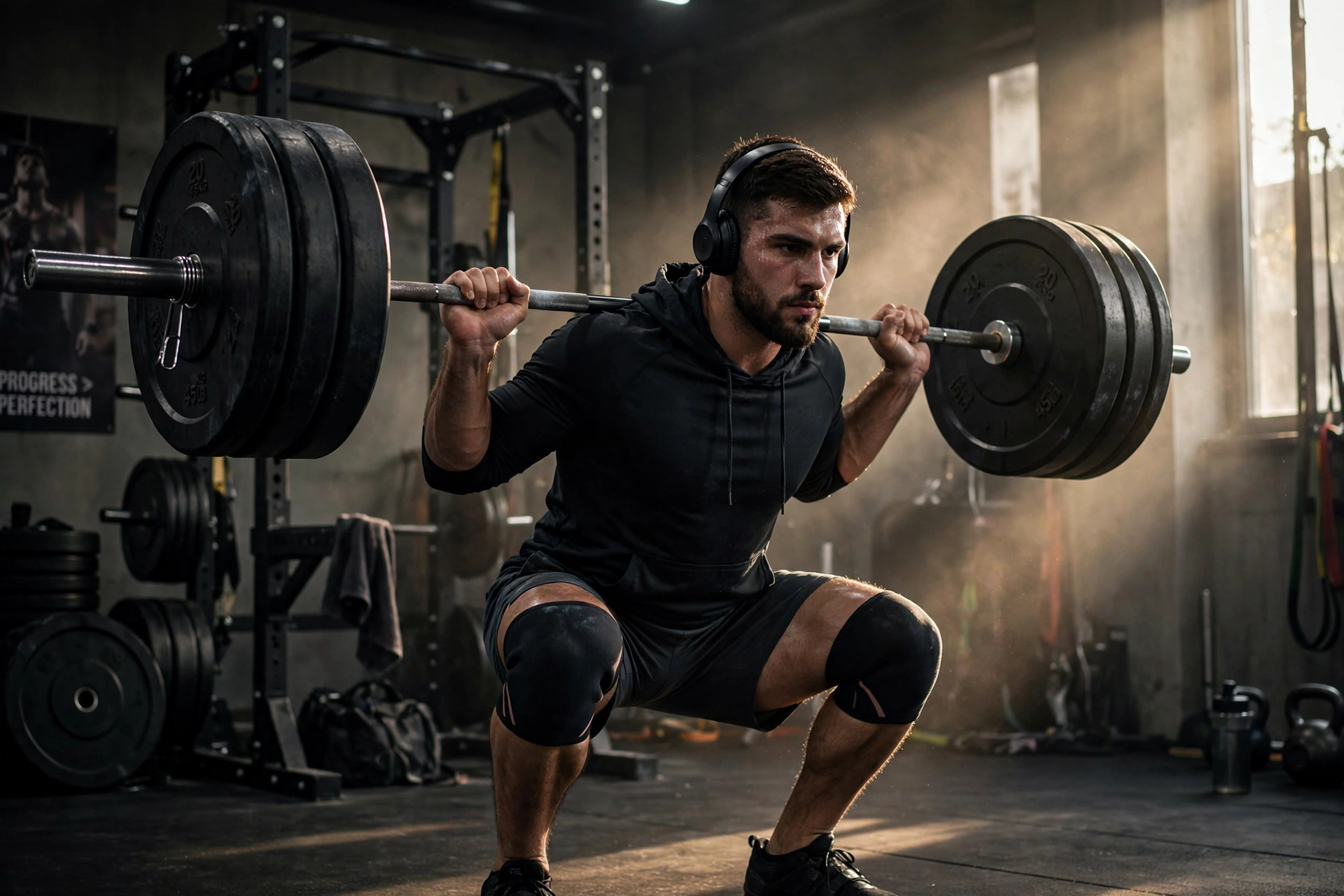
Squat Strength Standards: What’s a Good Squat?
A good squat is measured against your bodyweight. For men, squatting 1.5× bodyweight is a strong intermediate milestone, 2× is advanced, and 2.5× is elite. For women, the tiers run about 65% of those numbers. Here’s the full breakdown — including why depth is the thing that makes or breaks every comparison.
What is a good squat for my bodyweight?
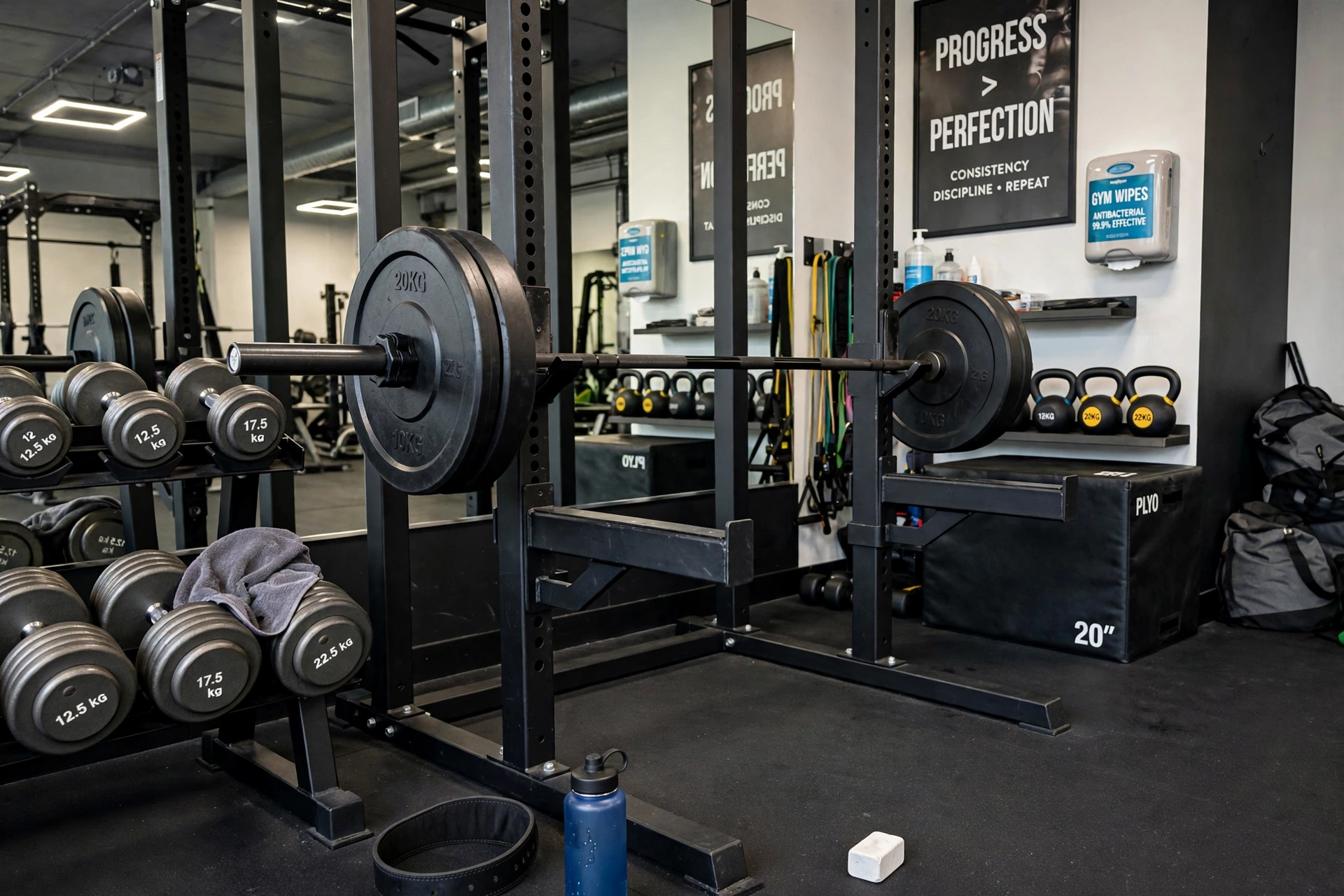
The squat is the lift where ratios matter most, because it’s the lift people cheat most. A “405 squat” means nothing until you know how deep it went. The standards below assume a competition-legal rep: hip crease below the top of the knee. These are community-consensus benchmarks from published coaching standards — orientation, not lab science.
| Tier | Squat (× bodyweight, men) | Squat (× bodyweight, women) | Example: 180-lb man |
|---|---|---|---|
| Beginner | 1.0× | 0.65× | 180 lb |
| Intermediate | 1.5× | 1.0× | 270 lb |
| Advanced | 2.0× | 1.3× | 360 lb |
| Elite | 2.5× | 1.6× | 450 lb |
Notice the squat ratios run higher than bench — that’s normal. Your legs and hips move more weight than your chest and triceps, and the squat’s leverages favor bigger numbers. If your squat ratio is lower than your bench ratio, something is off — usually depth, usually fixable.
How do the strength tiers actually break down?
Beginner (1.0× bodyweight)
A bodyweight squat to proper depth — 180 lb at 180 lb bodyweight. This is where a few months of consistent training lands most healthy adults. It sounds modest until you try it with real depth. Most “I squat 225” claims die the first time someone films from the side.
Intermediate (1.5× bodyweight)
270 lb at 180 lb. This is the tier where squatting starts feeling like a skill, not just an exercise — bracing, bar position, and depth all have to be dialed. Typically one to three years in. A 1.5× squat to depth puts you ahead of the large majority of gym-goers.
Advanced (2.0× bodyweight)
360 lb at 180 lb — a double-bodyweight squat. This demands years of structured training and usually some coaching. Lifters here are thinking about programming blocks, managing fatigue, and probably nursing at least one cranky joint.
Elite (2.5× bodyweight)
450 lb at 180 lb. Competitive powerlifter territory. If you’re here, you squat more than most personal trainers have ever attempted, and you already know it.
Why does depth change everything?
Depth is the single biggest variable in squat standards, and the one people are least honest about. A parallel squat and an ass-to-grass squat can differ by 5% or more; a half-squat — the kind where the thighs never get near parallel — can handle 15–40% more than a full squat. That’s not a rounding error. That’s two different lifts.
The standard that counts
Hip crease below the top of the knee. That’s the competition standard, and it’s what every ratio on this page assumes. If your test set didn’t hit depth, your ratio is fiction — flattering fiction, but fiction.
How to check yourself
Film a heavy set from the side. Not from the front, not from memory — from the side, where depth is actually visible. Most lifters are surprised, and not in the good way. I’ve never met anyone whose squats looked deeper on video than they felt. Do this before you compare yourself to any table.
High-bar vs. low-bar — does it matter for standards?
Yes, enough to mention. Low-bar position typically lets you move around 4% more than high-bar thanks to better leverage — shorter moment arm at the hip, more posterior chain. They’re different lifts wearing the same name, so track them separately.
The standards above are written with low-bar competition squats loosely in mind, but honestly, at 4% the difference is smaller than the depth variable. Get your depth right first; worry about bar position second. And if you switch positions, give yourself a few weeks — your “1.6×” high-bar number won’t transfer 1:1 on day one of low-bar.
How do I find my tier from my 1RM?
Divide your best competition-depth single — or your estimated max from the squat max calculator — by your bodyweight.
Example 1: You weigh 200 lb and squat 315 to depth. That’s 315 ÷ 200 = 1.58× — intermediate, knocking on advanced.
Example 2: You weigh 165 lb and squat 275. That’s 275 ÷ 165 = 1.67× — same neighborhood as Example 1 despite 40 fewer pounds on the bar. Ratios doing their job.
Example 3: You weigh 190 lb and “squat” 315 — but video shows high reps. Cut to depth and it’s really 275. That’s 275 ÷ 190 = 1.45×, not 1.66×. The table didn’t change; your honesty did. This is the most common correction in squat standards.
Estimate from a 3–5 rep set for the tightest number, and remember squat estimates swing 5–8% week to week. Use the trend across a month, not a single session.
What are good squat standards for women?
The women’s column runs about 65% of men’s — so a bodyweight squat (1.0×) is a strong intermediate milestone, and 1.3× is advanced. In practice, many women find their squat ratios climb faster relative to bench than men’s do, because lower-body strength has less of a gap between sexes than upper-body strength.
If you’re a woman squatting 1.2× bodyweight to depth, you’re doing better than the table suggests at first glance — the table is conservative by design. Keep going.
How do I move up a tier?
Beginner to intermediate is mostly about showing up and adding weight — linear progression works beautifully here. Eat enough, sleep enough, squat two to three times a week, and 1.5× arrives on schedule.
Intermediate to advanced is where depth discipline and programming separate people. This is the stretch where lifters discover their “1.7× squat” was really 1.5× once depth got honest — and then have to rebuild. It’s humbling and it’s the best thing that can happen to your training. Add paused squats, front squats as an accessory, and a real program instead of vibes.
Advanced to elite is years of patient block periodization. There’s no paragraph that shortcuts it.
Frequently Asked Questions
Is a 315-lb squat good?
At 200 lb bodyweight, 315 is 1.58× — solid intermediate. At 180 lb, it’s 1.75× — strong. At 225 lb, it’s 1.4× — respectable but not remarkable. And all of that assumes depth. Without depth, it’s not a data point.
Do these standards assume high-bar or low-bar?
Loosely low-bar, but the 4% difference is smaller than most lifters’ depth error. Fix depth first, then worry about bar position.
Why is my squat weaker than my deadlift?
That’s normal — almost everyone’s deadlift outruns their squat. The deadlift starts from the floor with no eccentric to control and uses a favorable leverage for most body types. If your squat is within 80–85% of your deadlift, your balance is fine.
How often should I test my squat max?
Rarely as a true single. Re-estimate from strong 3–5 rep sets every couple of months and save actual max attempts for program peaks or competitions. Your joints will thank you.
Can I use the leg press to estimate my squat?
No — not with these standards. The leg press removes balance, bracing, and depth from the equation. It’s a different movement. Track it separately if you like, but don’t convert it into a squat ratio.
A note on these numbers
These tiers are community-consensus benchmarks, not lab-derived norms — no study defines “advanced.” They’re compiled from decades of published coaching standards and competition data, and they’re meant for orientation and goal-setting. Your leverages, age, and training history move you a tier in either direction. The trend line is still the only standard that really matters: is the number going up over time, at honest depth?


