Deadlift Strength Standards: What’s a Good Deadlift?
A good deadlift is measured against your bodyweight. For men, pulling 2× bodyweight is a strong intermediate milestone, 2.5× is advanced, and 3× is elite. For women, the tiers run about 65% of those numbers. Here’s the full breakdown — including why grip, not back strength, is what usually decides your tier.
What is a good deadlift for my bodyweight?
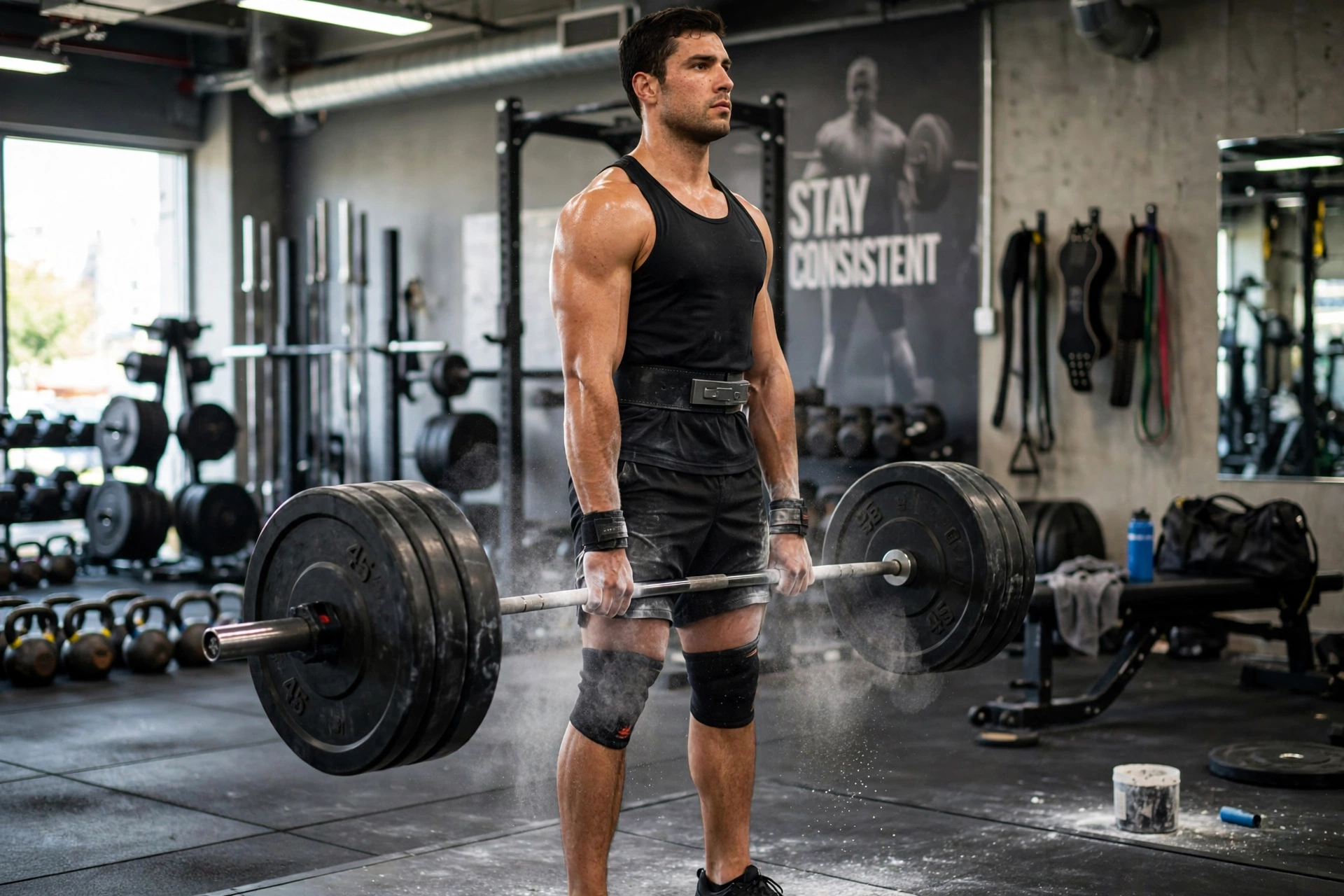
The deadlift is the lift where ratios run highest, because it’s the lift where your whole posterior chain gets to work at once — and there’s no eccentric to control, no depth to hit, no bench to lie on. Just pick it up. The standards below are community-consensus benchmarks from published coaching standards. Not lab science; orientation.
| Tier | Deadlift (× bodyweight, men) | Deadlift (× bodyweight, women) | Example: 180-lb man |
|---|---|---|---|
| Beginner | 1.25× | 0.80× | 225 lb |
| Intermediate | 2.0× | 1.30× | 360 lb |
| Advanced | 2.5× | 1.60× | 450 lb |
| Elite | 3.0× | 2.0× | 540 lb |
If your deadlift ratio lags far behind your squat ratio, that’s unusual and worth investigating — for most lifters the pull leads. If your deadlift is barely above your squat, grip or technique (not back strength) is usually the bottleneck.
How do the strength tiers actually break down?
Beginner (1.25× bodyweight)
225 lb at 180 lb bodyweight. Most healthy adults get here within a few months of learning the movement — the deadlift is the most intuitive heavy lift, and novice gains come fast. If you can’t pull 1.25× yet, it’s almost always a technique issue, not a strength issue. Learn to hinge and the number jumps.
Intermediate (2.0× bodyweight)
The double-bodyweight deadlift — 360 lb at 180 lb. This is the milestone that separates casual lifters from serious ones, typically one to three years in. A 2× pull means your grip, back, and legs all work together, which is rarer than it sounds.
Advanced (2.5× bodyweight)
450 lb at 180 lb. Years of structured training. Lifters here have opinions about hook grip versus mixed grip, know their sticking point by name, and have probably torn a callus or two learning where it is.
Elite (3.0× bodyweight)
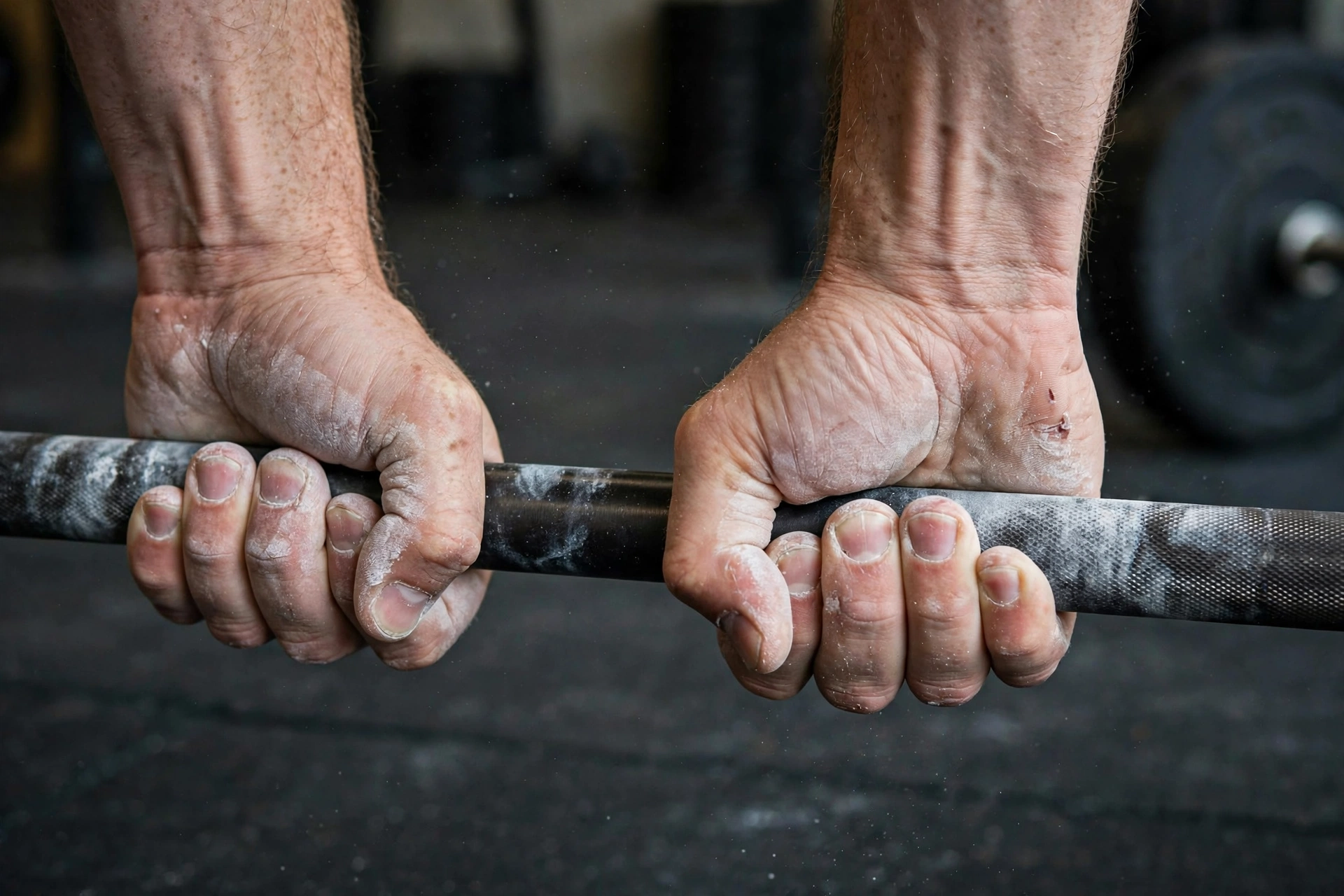
540 lb at 180 lb — triple bodyweight. This is national-level competitive territory. Your grip is a trained skill, your technique is rehearsed, and your hands look like topography.
Why is grip the real gatekeeper?
Here’s the thing the ratios don’t tell you: past the intermediate tier, most deadlifts aren’t failed by backs or legs. They’re failed by hands. I’ve watched lifters pull 500 for five whose grip gave out at 540 for a single — the back had the rep, the hands didn’t.
This matters for standards because your “deadlift tier” might really be your “grip tier.” If your hands are the limiter, you have three honest options: train grip directly (heavy holds, farmer’s walks), switch to hook or mixed grip for max attempts, or accept that your strapped number and your unstrapped number are two different lifts. All three are legitimate. What’s not legitimate is comparing your strapped 2.5× to someone’s hook-grip 2.5× and calling it the same achievement.
For tier purposes, use whatever grip you’d use in competition — or just be consistent. Mixed messages to yourself produce mixed numbers.
Sumo vs. conventional — do the standards differ?
They’re different lifts with different leverages, so strictly speaking, yes. Sumo typically lets lifters — especially those with certain hip structures — pull a bit more by shortening the range of motion and putting the hips closer to the bar. Conventional rewards long arms and a strong back.
But the standards above don’t split them, and for good reason: at the beginner through advanced tiers, the difference is smaller than the grip and technique variables. Track sumo and conventional separately if you train both, and compare each against the table on its own. Don’t sumo-pull 2.3× and claim the conventional standard — or vice versa. The table is generous enough already; don’t stretch it.
How do I find my tier from my 1RM?
Divide your best pull — or your estimated max from the deadlift max calculator — by your bodyweight.
Example 1: You weigh 200 lb and pull 405. That’s 405 ÷ 200 = 2.03× — intermediate, right at the double-bodyweight line.
Example 2: You weigh 165 lb and pull 385. That’s 385 ÷ 165 = 2.33× — advanced territory, despite 20 fewer pounds on the bar than Example 1.
Example 3: You weigh 220 lb and pull 315 with straps, 275 without. Your strapped ratio is 1.43×; unstrapped it’s 1.25×. Both are real numbers — they just answer different questions. Log which is which.
One caveat from the research: every 1RM formula ever tested underestimates the deadlift by 9–14%, so if you’re working from an estimate rather than a tested single, your real tier is probably a touch higher than the math says.
What are good deadlift standards for women?
The women’s column runs about 65% of men’s — 1.3× intermediate, 1.6× advanced, 2.0× elite. In practice, women’s deadlift ratios tend to sit closer to men’s than bench ratios do, because the deadlift is less upper-body-dominant and leverages matter more than absolute muscle mass.
A 2× bodyweight deadlift is an elite milestone for women and genuinely rare. If you’re pulling 1.5×, you’re already ahead of most of the table’s expectations — keep pulling.
How do I move up a tier?
Beginner to intermediate is technique and consistency — learn the hinge, pull twice a week, add weight. The deadlift rewards beginners faster than any other lift.
Intermediate to advanced is where grip becomes the project. This is the tier where lifters discover their back was ready for 2.3× a year before their hands were. Direct grip work, hook grip practice (it hurts for about three weeks, then it doesn’t), and managing fatigue — deadlifts are the most neurally demanding lift, so you can’t just add volume the way you can with bench.
Advanced to elite is programming, peaking, and patience. Heavy singles, block periodization, and a healthy respect for recovery. The deadlift punishes greed more than any other lift — the difference between a PR and an injury is often one rep too many.
Frequently Asked Questions
Is a 405-lb deadlift good?
At 200 lb bodyweight, 405 is 2.03× — a solid intermediate pull, right at the double-bodyweight milestone. At 180 lb it’s 2.25× (advanced); at 225 lb it’s 1.8× (respectable intermediate). Bodyweight is the whole context.
Should I use straps when testing for standards?
Be consistent with how you train. If you always pull strapless, test strapless. Just know your strapped and unstrapped numbers are different lifts — log them separately and compare each to the table on its own terms.
Why is my deadlift so much stronger than my squat?
That’s the normal shape. The deadlift skips the eccentric, has no depth requirement, and favors common leverages. A deadlift roughly 120–130% of your squat is typical; if the gap is much bigger, your squat depth is probably the issue, not your pull.
Do touch-and-go reps count for standards?
For tier purposes, use dead-stop reps — each rep from a full reset. Touch-and-go borrows the stretch reflex and inflates the number. The standards assume the lift’s actual definition: pick it up from a dead stop.
How often should I max out on deadlift?
Rarely. The deadlift is the most fatiguing lift to max — true singles a few times a year, estimates from 3–6 rep sets the rest of the time. Lifters who max monthly on deadlift usually end up injured or stalled, sometimes both.
A note on these numbers
These tiers are community-consensus benchmarks aggregated from published coaching standards and competition data — no laboratory defines “advanced.” They’re for orientation and goal-setting. Leverages (especially arm length), grip, and training age swing individuals a tier in either direction. And the only standard that ultimately matters is the trend: is the number moving up over the years?