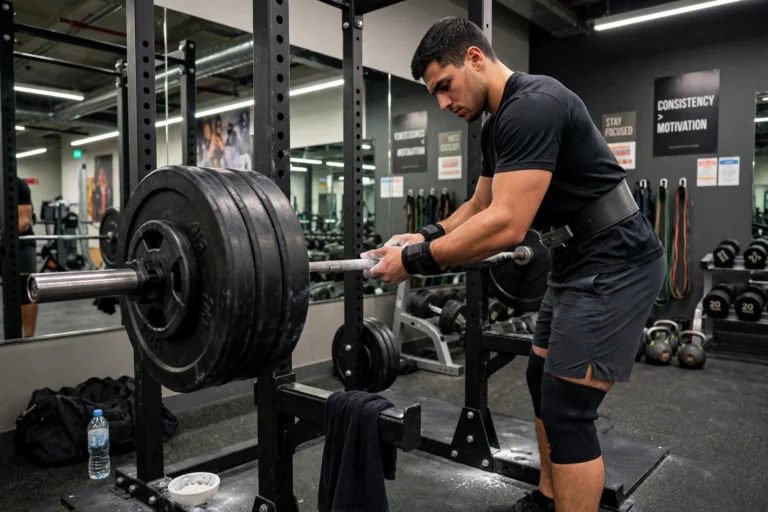

How to Peak for a 1RM Attempt
Peaking for a 1RM means spending the final one to two weeks shedding fatigue while keeping your strength sharp — then executing a planned warm-up ladder and three smart attempts on test day. Most failed max attempts aren’t a strength problem. They’re a peaking problem: too much volume too close to the test, jumps that are too ambitious, or no real plan for attempt selection.
What does “peaking” actually mean?
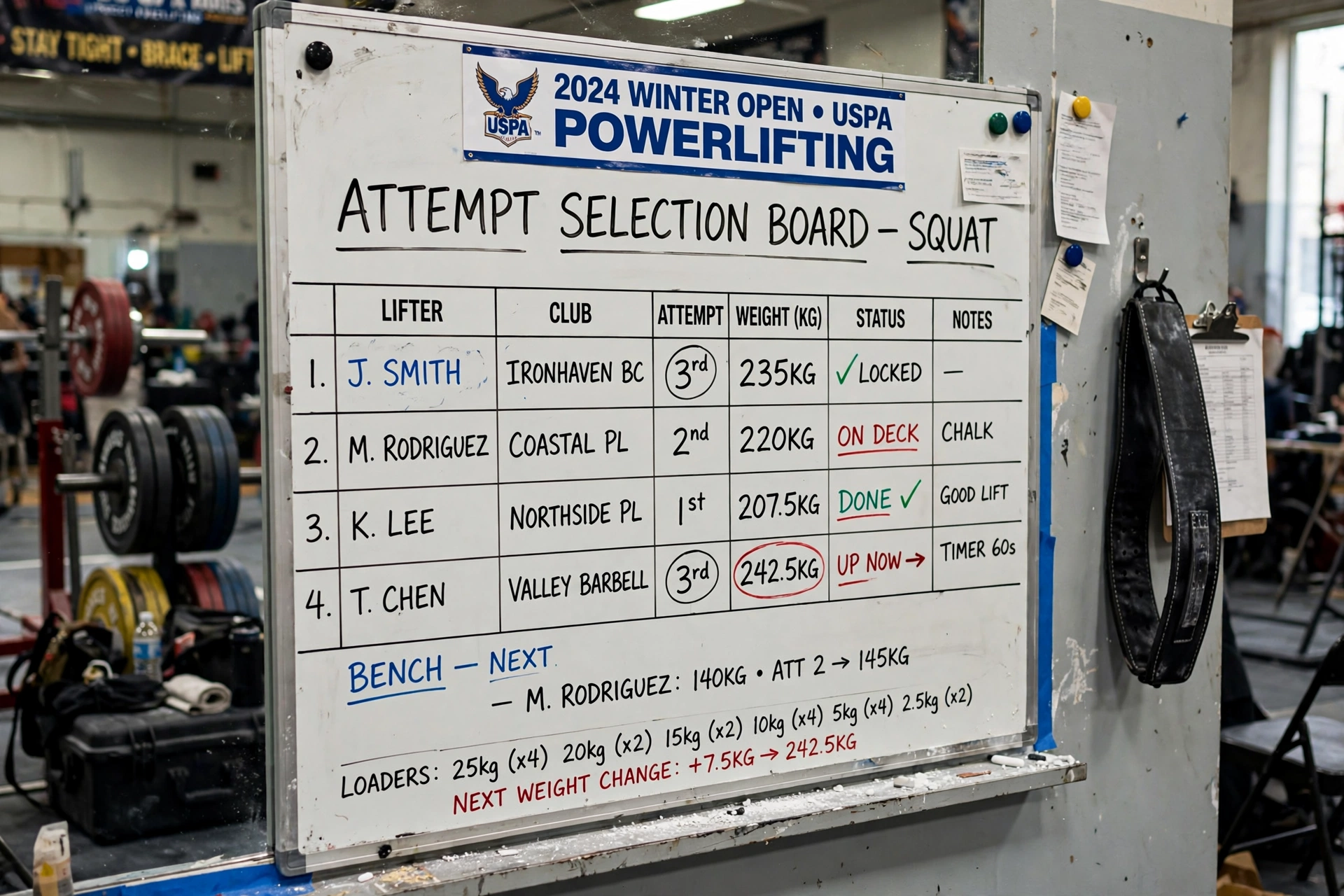
Peaking is the short phase at the end of a training block where you deliberately pull back so that test day lands on the highest point of your readiness. Think of it this way: training builds two things at once — fitness (strength) and fatigue (tiredness). Heavy training weeks build a lot of both. The fatigue hides some of the fitness. A peak strips the fatigue away faster than the fitness fades, so what shows up on test day is the strength you actually built.
Here’s the part people get wrong: peaking is not resting. If you just lie on the couch for two weeks, you don’t peak — you detrain. The skill is in reducing the right thing. You cut volume (total reps and sets) substantially, but you keep touching heavy-ish weights so your nervous system stays primed. A single at 85-90% in the final week does more for your max than any amount of foam rolling.
For most lifters, a peak lasts one to two weeks — shorter doesn’t clear fatigue, longer starts costing sharpness.
How should the last two weeks before a max test look?
Two weeks out: start the taper
This is where volume starts coming down. If your normal heavy week has you doing, say, 15-20 hard working sets on the lift you’re testing, cut that roughly in half. Keep the top-end intensity honest — work up to something in the 85-90% range for a single or double, but don’t grind. Every rep in these two weeks should move with speed and confidence. If a rep is slow, the weight is too heavy for a taper week.
Assistance work gets trimmed harder than main work. The accessories that built your base have done their job; now they’re just fatigue you don’t need. Cut them to about a third of normal volume, or drop the least important ones entirely.
Test week: stay sharp, do less
Early in test week (say Monday/Tuesday for a Saturday test), do one light-to-moderate session on the lift: work up to a single around 80-85%, a few back-off sets at 60-70%, and go home. That’s it. The goal is to remind your body what heavy feels like without creating anything you’d need to recover from.
The last 2-3 days before the test, don’t touch the lift at all. Walk, stretch, sleep — the work is done. I know the urge to “test the waters” with something heavy on Thursday. Resist it. That Thursday single has ruined more Saturday maxes than any programming mistake I can name. Trust the taper.
How do I warm up on test day?
Your test-day warm-up has one job: arrive at your opener warm, neurologically awake, and completely unfatigued. The classic mistake is doing a normal workout’s worth of volume before the attempts even start. A max-day warm-up is a ladder — reps shrink as weight climbs, and the last thing you do before your opener is a single at 90%.
Here’s the ladder, based on your planned opener (not your goal max — your opener):
| Set | Load (% of opener) | Reps | Rest after |
|---|---|---|---|
| 1 | 50% | 8 | 2 min |
| 2 | 60% | 5 | 2 min |
| 3 | 70% | 3 | 3 min |
| 4 | 80% | 1 | 3 min |
| 5 | 90% | 1 | 5 min |
| Opener | 100% | 1 | — |
Two details matter. First, the rests get longer as the weight climbs — take a full five minutes before the 90% single. Your muscles might feel ready after two, but your nervous system needs the full five. Second, that 90% single is non-negotiable: it’s the bridge rep so the opener doesn’t feel like a shock.
Want this calculated automatically? The warm-up calculator builds the full ladder from your target weight. For the complete protocol including lift-specific adjustments, see how to warm up for a 1RM.
How do I pick my three attempts?
This is where max days are won or lost, and the framework comes straight from the NSCA’s Essentials of Strength Training and Conditioning (Haff & Triplett). Three attempts, each with a job:
Opener — 90-93% of your goal max. This should be a weight you could triple on your worst day. The opener’s job is not to impress anyone; it’s to get you on the board with a confident, fast single. A missed opener poisons the whole day. Be conservative — every experienced coach says the same thing: open light.
Second attempt — 97-98%. This is your “should-hit” number — essentially your current max, or a hair under it. If the opener moved fast, take the planned second. If it was grindy, hold or repeat rather than jumping.
Third attempt — the PR. This is the swing. If the first two moved well, take your shot at the personal record. Jumps between attempts should stay in the 2.5-5% range — bigger jumps are lottery tickets, not strategy.
Rest 3-5 minutes between attempts. Shorter and you’re still fatigued; longer and you cool down. Set a timer — on max day, your sense of time is unreliable.
One more thing about attempt selection: write it down before test day. Decide your opener, second, and the conditions for your third (e.g., “if second moved fast, go 5 lb over PR; if it was slow, match PR”). Making these decisions with a clear head the night before beats making them with adrenaline and an audience.
What should I eat and sleep before test day?
Boring answer, but it’s the right one: eat normally, sleep normally, change nothing. Test day is the worst possible time to experiment — no new pre-workout, no new meal timing, no supplement you read about on Tuesday.
Eat a real meal 2-3 hours before lifting — the same kind of meal you’d eat before any heavy session. Bring food you know sits well. Between attempts, small sips of water and maybe something light.
Sleep matters more than any meal. A week of short sleep leading into the test will hurt you — that’s partly what the taper is for. The night before, get to bed early, but don’t lie there stressing about falling asleep.
How do I handle nerves on the platform?
Being nervous is normal and even useful — adrenaline is part of why competition PRs often beat gym PRs. The problem isn’t nerves; it’s letting nerves change your plan. The lifters who bomb out are usually the ones who let the atmosphere talk them into a bigger opener or a greedier third attempt.
What actually works: routine. Same warm-up, same order, same rests. Between attempts, sit down, breathe, and think about exactly one cue — the single technical thing that makes your lift work (“chest up,” “push the floor away”). One cue, not five.
Visualization helps if you’ve practiced it, and it’s useless if you haven’t — don’t try it for the first time on test day. If you want it in your toolkit, spend the last two weeks of the taper visualizing your opener: the walk-up, the setup, the rep, the lockout. By test day it should feel like something you’ve already done.
What are the most common peaking mistakes?
Testing too early. Hitting a heavy single “just to see where I’m at” ten days out. Now you’ve added fatigue and given yourself something to obsess over. The test is on test day.
Changing everything. New shoes, new belt position, new grip width — test day is for the familiar. Try new things eight weeks out, not eight hours out.
Opening too heavy. I keep coming back to this because it’s the number-one max-day killer. Your opener should bore you. If your opener is exciting, it’s too heavy.
Cutting weight and maxing in the same week. If you’re cutting for a weight class, that’s a separate project with its own plan. Don’t try to peak for a PR while depleted — pick one goal per test day.
No plan for misses. Decide in advance: if I miss my second, I repeat it (or drop slightly) for my third. Lifters without a miss plan tend to either quit mentally or take a wild jump. Neither ends well.
Frequently Asked Questions
How long should I peak before a 1RM test?
One to two weeks for most lifters. Cut volume roughly in half two weeks out while keeping intensity honest (singles around 85-90%), then go very light early in test week and rest the lift completely for the final 2-3 days. Shorter than a week doesn’t clear fatigue; longer than two starts costing sharpness.
Should I stop training completely before max day?
No — that’s detraining, not peaking. Keep touching the lift with light-to-moderate work (a single at 80-85% early in test week) so your nervous system stays primed. What you cut is volume and grinding reps, not all movement. Complete rest is for the final 2-3 days only.
What percentage should my opener be?
90-93% of your goal max, per NSCA guidelines — a weight you could triple on a bad day. The opener’s only job is to get you on the board with a fast, confident single. A missed opener ruins the day’s structure, so when in doubt, open lighter than your ego wants.
How much rest do I need between max attempts?
Three to five minutes. Shorter and residual fatigue drags the next attempt down; longer and you cool off and lose the neural groove. Use a timer — your sense of time is unreliable when adrenaline is involved.
Can I peak for more than one lift on the same day?
You can, but sequence matters: squat first, then bench, then deadlift (the competition order exists for a reason — deadlift last because it’s the most fatiguing). Expect each subsequent lift’s top end to run slightly below what it would be fresh. If one lift is the priority, test it first or give it its own day.
Sources
- Haff, G. G., & Triplett, N. T. (Eds.). Essentials of Strength Training and Conditioning (NSCA) — attempt selection, rest intervals, and testing protocols.
- LeSuer, D. A., et al. (1997). “The accuracy of prediction equations for estimating 1-RM performance.” Journal of Strength and Conditioning Research, 11(4), 211-213.
Learn more