How to Estimate Your 1RM Without Maxing Out
Three ways to estimate your one rep max without ever testing it — the 5RM method, RIR method, and velocity-based.
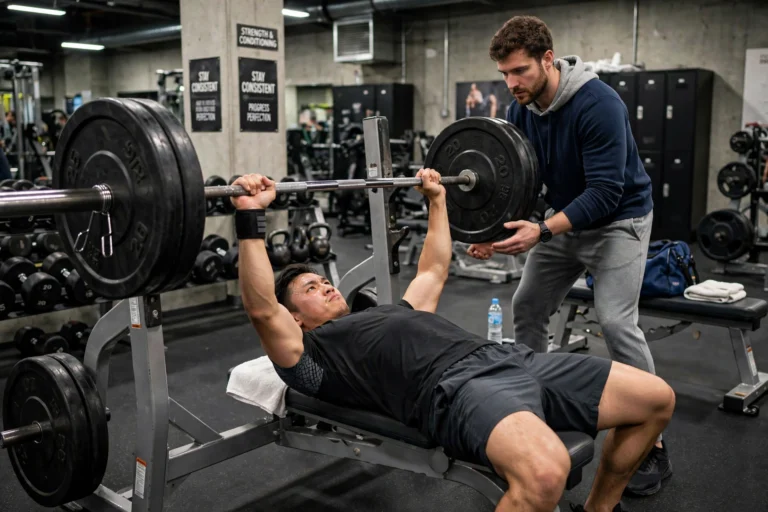
Three ways to estimate your one rep max without ever testing it — the 5RM method, RIR method, and velocity-based.

New lifters shouldn’t test their 1RM — technique isn’t stable enough for the number to mean anything. What to do instead: learn the movements, build a base, estimate from 5–8 rep sets, and the five signs you’re ready to test.

Retest your true 1RM every 8–12 weeks as an intermediate, once or twice a year as advanced, never as a beginner. Between tests, re-estimate from training sets — most of your ‘retesting’ should be re-estimating.

Your true 1RM is what you lifted; your e1RM is what a formula predicts. For programming they’re interchangeable — and e1RM wins on practicality. When to test, when to estimate, and the rolling system most lifters should use.
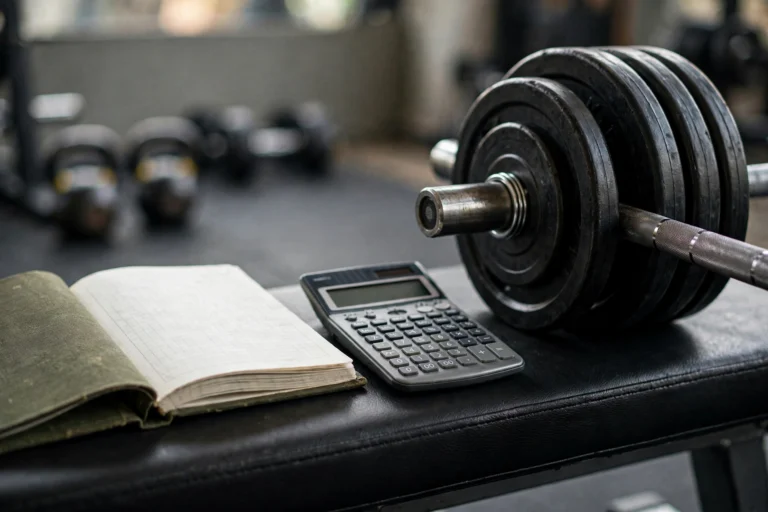
How close do 1RM estimates land to the truth? The research says within ~5% — but only from low-rep sets on big lifts. Study-by-study breakdown of LeSuer 1997, Reynolds 2006, and why every formula underestimates the deadlift.

A max attempt demands a real warm-up: 5–10 minutes general prep, then the barbell ladder from 50% to 90% of your estimated max. Includes the exact sets, reps, rests, and lift-specific tweaks for squat, bench, and deadlift.

The exact protocol for testing your true one rep max without getting hurt: one lift per day, a structured warm-up ladder, 2–3 attempts in small jumps, and 3–5 minutes rest between heavy singles.

A one rep max is the heaviest weight you can lift for one clean rep — and the number every serious program is built on. This guide explains true vs estimated 1RM, which lifts to test, and why beginners should estimate instead of maxing out.
End of content
End of content